Straight answers for dog owners

How do you remove plaque from a dog’s teeth?

Start with the distinction that changes everything: soft plaque can be disrupted at home; hardened tartar is a different problem. Brushing remains the best home method. A fine seaweed powder can be a useful daily addition when owners need something simple enough to use consistently.

  • Best first stepDaily brushing
  • Useful additionFine daily powder
  • Hard depositsAsk your vet
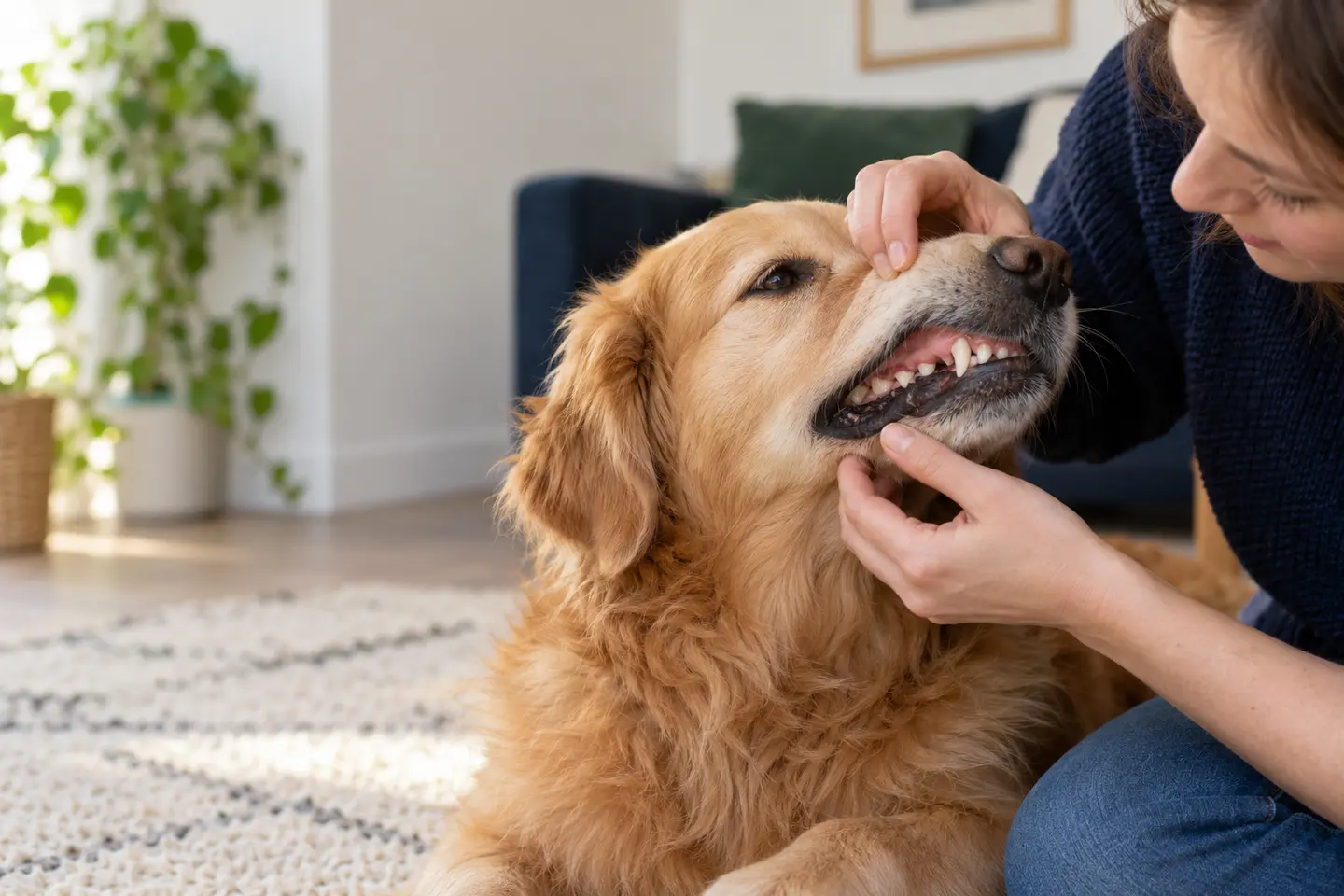
Owner gently checking a golden retriever's teeth at home
A weekly look helps you notice changes early. Pain, bleeding, swelling, loose teeth or difficulty eating need veterinary advice.

Most-searched questions

The questions that matter before choosing a plaque remover

01

What is the best plaque remover for dogs?

For soft plaque, brushing every day with dog-safe toothpaste is the best-supported option. Powders, chews and dental diets are supporting tools—not substitutes for examining a painful or unhealthy mouth.

Compare the options →
02

Can I remove dog tartar at home?

Do not scrape a dog’s teeth with metal tools. Firm yellow or brown calculus is bonded to the tooth and may extend below the gumline. A vet must assess what can be cleaned safely.

Plaque versus hardened tartar →
03

Does seaweed help dogs’ teeth?

Research has investigated daily Ascophyllum nodosum for plaque, calculus and breath measures. It is most sensibly used consistently as part of prevention—not sold as a cure for dental disease.

See what the research says →
04

How long should I try a powder?

Published studies assess changes over weeks rather than days. A daily routine, correctly measured, gives you a fairer basis for judging whether it suits your dog.

Timing and consistency →
05

Why choose a fine powder?

A fine texture disperses through food and is easy to make part of the same routine every day. That convenience matters when the alternative is a dental product that remains unused in the cupboard.

Using powder consistently →
06

What about iodine?

Brown seaweed naturally contains iodine. Check the label and ask your vet before using it for a dog with a thyroid condition or one receiving veterinary treatment.

Read the iodine guide →

Best does not mean one tool for every mouth

Brushing is still number one. Consistency is what makes a supporting routine useful.

1Brush soft plaque awayUse a dog toothbrush and dog-safe toothpaste daily where possible.
2Add a practical daily supportA correctly measured fine powder may suit dogs that resist complete brushing.
3Know when home care stopsHeavy tartar, inflamed gums and painful teeth require professional assessment.

How seaweed entered modern dental care

The history is modern research—not an ancient dental myth.

Brown seaweeds have a long history as foods and feed materials, but the specific use of Ascophyllum nodosum in oral-care supplements is supported by comparatively recent research. Controlled work published during the 2010s investigated daily intake and oral-health measures. Dog studies then examined formats including treats and powdered supplementation, and a 2023 veterinary review brought the available dog and cat evidence together.

That history supports a measured conclusion: seaweed powder is interesting as a preventive daily aid. It does not make tooth brushing obsolete and it does not turn established periodontal disease into something that can be treated from a food bowl.

Read the evidence-led seaweed guide →
Which description fits your dog?

Choose the next step by what you can actually see

Soft or invisible plaque

A sticky bacterial film may not be obvious. Daily brushing is the best way to disrupt it before mineralisation.

Best next step: establish brushing.

Light surface staining or early deposits

Continue brushing where comfortable and discuss complementary dental products with your vet or vet nurse.

Best next step: combine practical prevention.

Hard yellow or brown tartar

Powders are not a substitute for examining mineralised deposits, gum inflammation or disease below the gumline.

Best next step: veterinary dental assessment.

Make the routine measurable

How much powder—and how long could a tub last?

Use the separate weight calculator for a serving guide, estimated tub duration and daily cost. Always follow the label on the product you use.

Calculate for my dog →

Dog dental library

Go deeper into one question

Complete guide

How to remove plaque from a dog’s teeth

A practical home routine and the signs that mean stop and call your vet.

Read article →
Know the difference

Dog plaque vs tartar

Soft biofilm, mineralised calculus and why the distinction changes the answer.

Read article →
Ingredient evidence

Why is seaweed used for dogs’ teeth?

What Ascophyllum nodosum is, what studies assessed and what remains uncertain.

Read article →
Buyer’s guide

Best seaweed dental powder for dogs

How to compare species, declared iodine, texture, directions and value.

Read article →
Safety guide

Can dog tartar be removed without a vet?

Why scraping at home is risky and when professional cleaning matters.

Read article →
All questions

Browse every dog dental guide

Feeding, iodine, timelines, brushing and alternatives explained clearly.

View the library →

Sources and editorial approach

This site separates established veterinary guidance from supplement research. Key sources include the PDSA’s dog-dental guidance and peer-reviewed studies indexed by PubMed Central and Frontiers in Veterinary Science. Information is educational and is not a diagnosis.